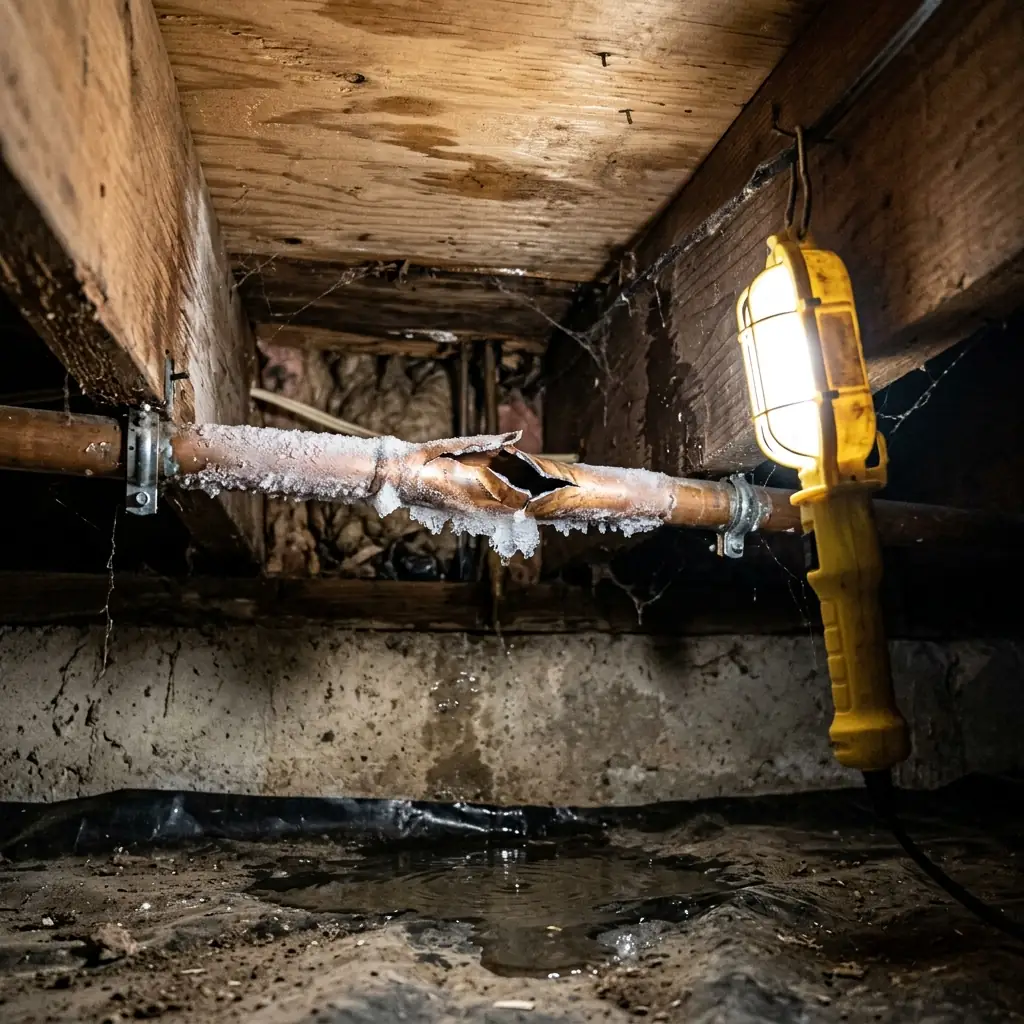
Why Pacific Northwest Homes Are Vulnerable to Cold Snaps
Homes built for a mild, wet climate generally use less pipe insulation and fewer freeze-protection features than homes in regions that see hard freezes every winter. That's a reasonable building choice most years, but it means a sudden Arctic outflow event, like the one in late December 2021, can catch plumbing systems unprepared in a way a Minnesota or Montana home wouldn't be.
Which Pipes Are Most Vulnerable in Crawl-Space Homes
Bothell's housing stock leans heavily on crawl-space construction rather than slab foundations, which changes which pipes are at risk. Supply lines running through an unheated, unconditioned crawl space are the most exposed, along with exterior hose bibs and any plumbing run through an attic. These are different vulnerability points than a slab-on-grade home would have, where pipes are mostly protected by the concrete itself.
What Does Winterizing Look Like for a Bothell Home?
Pull garden hoses off their bibs and drain them before the season's first hard-freeze forecast, because a connected hose traps water right at the wall. Insulate any exposed pipes in the crawl space or attic with foam pipe sleeves, sold at any hardware store. Then close up the openings where plumbing penetrates the rim joist and exterior walls; in crawl-space construction, wind-driven cold air through those penetrations is often what actually causes a freeze, not just outdoor temperature alone.
What Should You Do When an Arctic Blast Reaches King County?
Swing open the vanity and kitchen cabinet doors on exterior walls, letting heated room air circulate around the supply lines behind them. Let faucets on vulnerable lines drip slightly, since moving water is harder to freeze than still water. If you'll be away during a forecasted cold snap, keep the thermostat no lower than 55 degrees rather than turning the heat off entirely.
If Your Pipe Does Burst: The First Minutes Matter Most
Find your main valve and close it before anything else, then call for burst pipe water damage help. Every additional minute water runs increases both the damage and the cost, so speed matters more than almost anything else once a pipe has actually failed.
Does Homeowners Insurance Cover Freeze Pipe Damage in Washington?
Most Washington homeowners policies cover sudden pipe bursts from freezing, provided you took reasonable steps to prevent it, like maintaining heat in the home. Damage from a pipe that froze because the heat was shut off for an extended period while the home sat vacant is more likely to face a claims dispute, so the steps above aren't just prevention, they also protect your claim.
Pipe already burst? Call (425) 917-6048 now. Our crew responds 24/7 across Bothell with extraction and structural drying equipment on every truck.