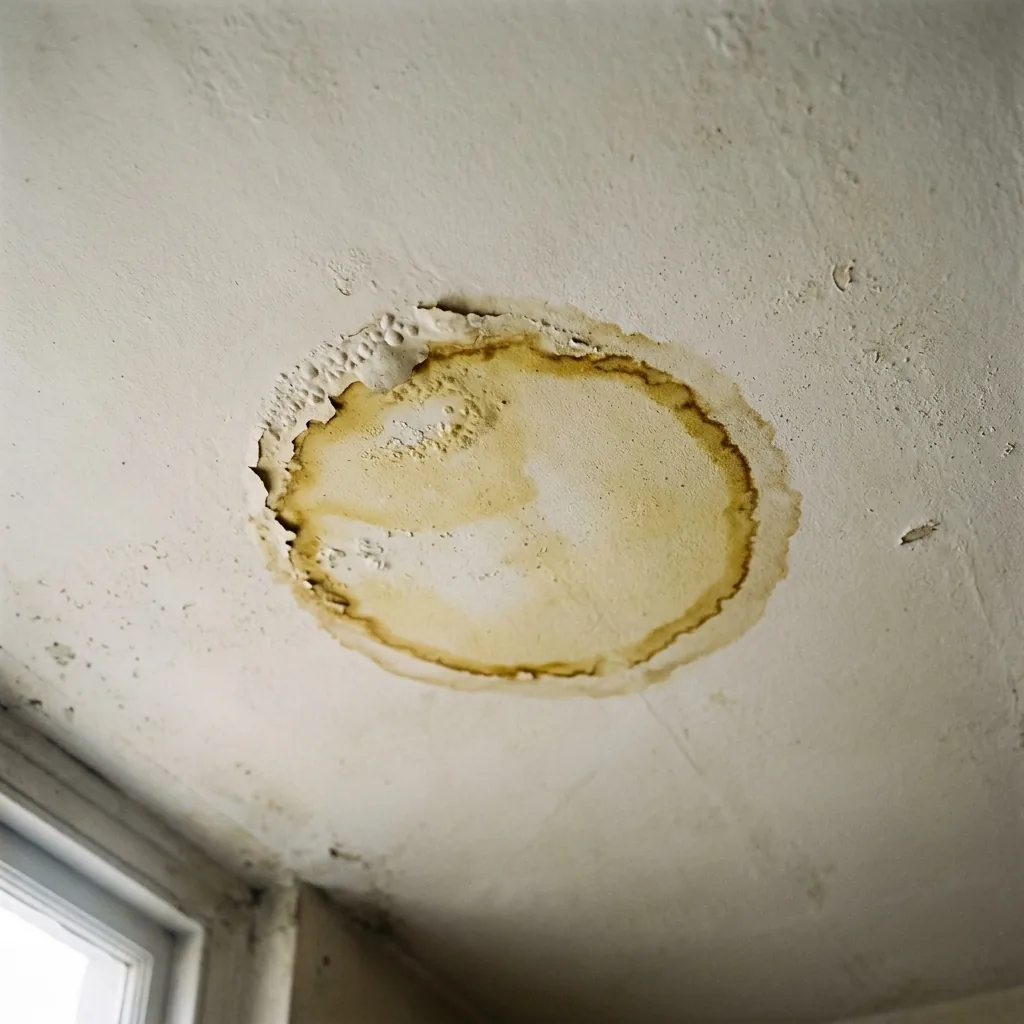
Sign 1: Water Stains That Return After Painting
A yellow-brown ring on a ceiling or wall is the most obvious sign, but the part homeowners miss is what happens after they paint over it. If the stain bleeds through again within a few weeks, the moisture source is still active behind the surface. Painting over a stain without finding the leak just hides the problem for a little longer.
Sign 2: Musty Odor That Doesn't Go Away
A persistent musty smell, especially in one specific room or near a closet, usually means moisture has been sitting somewhere out of sight long enough for mold or mildew to start growing. Air fresheners mask the smell but don't remove the cause, and the odor typically gets stronger over time rather than fading on its own.
Sign 3: Bubbling, Peeling, or Warped Paint or Wallpaper
Paint and wallpaper bond to a dry surface. When moisture gets behind them, the bond fails and you see bubbling, peeling, or a slightly warped texture even before any discoloration shows up. This sign often appears before a visible stain does, which makes it one of the earliest warnings available.
Sign 4: Soft Spots in Drywall or Ceiling
Press gently on a suspect area of drywall or ceiling. Healthy drywall feels firm and solid. Water-damaged drywall feels soft, slightly spongy, or gives more than it should under light pressure. This is a sign the material has already absorbed enough water to lose structural integrity, not just surface moisture.
Sign 5: Mold on Baseboards or Behind Furniture
Small black or green spots along baseboards, in closet corners, or on the wall behind furniture that's rarely moved often go unnoticed for months. These low-airflow areas are exactly where mold establishes first, since they stay damp longer than open, ventilated parts of a room. If you see this, there's a real chance the moisture source is still active behind that wall, not just residual.
Sign 6: Unexplained Spike in Your Water Bill
A water bill that jumps without a clear reason, like filling a pool or running irrigation longer than usual, often points to a hidden leak somewhere in the plumbing system. A slab leak or a slow pipe leak inside a wall can run for weeks before it becomes visible, and the water bill is sometimes the only early clue available.
Sign 7: Floors That Buckle, Cup, or Feel Spongy
Hardwood that cups or buckles, or carpet that feels damp or spongy underfoot away from any obvious spill, both point to moisture coming up from below rather than down from above. This is a different damage pattern than a roof or ceiling leak, and it usually means subfloor moisture that's been building for a while. Our hardwood floor water damage and structural drying teams see this pattern often in older Bothell homes with crawl-space construction, where moisture migrates upward before it's visible anywhere else.
Noticing any of these signs in your Bothell home? Call (425) 917-6048 for a no-obligation inspection. Catching hidden water damage early is almost always less expensive than waiting for it to become visible.